School choice is not only about selecting a school building, district, or learning environment. A truly meaningful choice in education also includes the ability to choose pathways that match a student’s strengths, goals, interests, and future career plans. In a modern education system, students need more than traditional classroom instruction. They need access to practical learning, career exploration, technical skills, mentorship, and opportunities that connect education with real life.
Career and Technical Education, commonly known as CTE, and work-based learning are becoming essential parts of this broader understanding of school choice. These pathways help students explore careers while still building strong academic foundations. They also give families more confidence that education is connected to future opportunity, not only classroom completion.
For many years, school choice has often been discussed in terms of public schools, charter schools, private schools, online programs, or district options. While those choices remain important, they are not complete on their own. Students also need choices inside the education experience.
A student interested in healthcare may benefit from health science courses, clinical exposure, or medical career exploration. A student interested in technology may need coding, cybersecurity, robotics, or digital systems training. A student interested in construction, design, engineering, business, agriculture, or public service may learn better when classroom knowledge is connected to hands-on work.
This is where CTE becomes powerful. It gives students access to structured pathways that combine academic learning with career-focused skill development. Instead of forcing every student into the same model, CTE allows education to become more flexible, practical, and personalized.
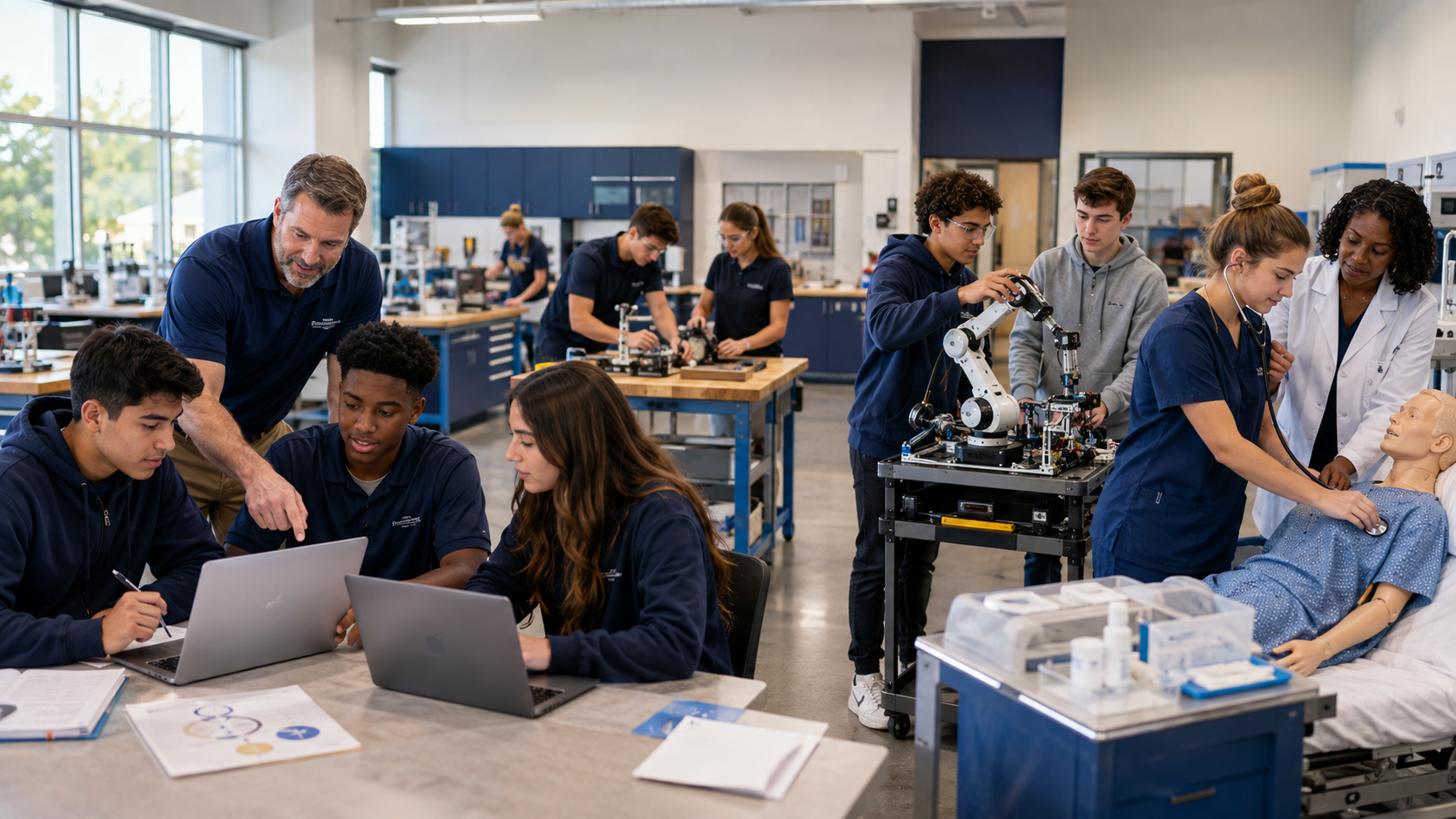
High-quality CTE programs help students understand how their education connects to the real world. These programs can include technical instruction, career labs, industry-recognized credentials, applied projects, workplace simulations, and partnerships with employers or community organizations.
CTE does not replace academic learning. It strengthens it by giving students a reason to use what they learn. Mathematics becomes more meaningful when applied to engineering, finance, manufacturing, construction, or data analysis. Communication skills become more important when students present ideas, work in teams, speak with mentors, or solve workplace problems. Science becomes more practical when connected to health, environmental systems, agriculture, technology, or skilled trades.
This type of learning can improve motivation because students can see a purpose behind their studies. When students understand how education connects to their goals, they are more likely to stay engaged, complete their programs, and plan responsibly for the future.
Work-based learning is one of the strongest ways to make school choice meaningful. It allows students to learn through direct exposure to professional environments. This may include internships, apprenticeships, job shadowing, employer-led projects, career mentoring, simulated workplaces, or supervised training experiences.
Through work-based learning, students begin to understand workplace expectations before they graduate. They learn how professionals communicate, solve problems, manage time, follow instructions, use tools, and take responsibility. These lessons are difficult to teach through textbooks alone.
Work-based learning also helps students make better decisions. A student may discover that a career path is a strong fit. Another student may realize early that a field is not the right choice. Both outcomes are valuable because they help students avoid wasted time, unnecessary debt, and unclear planning after graduation.
CTE and work-based learning give students more confidence because they provide direction. Many students leave school unsure about what comes next. Career-connected learning helps them explore options earlier and make informed decisions about college, training, employment, or entrepreneurship.
Families also benefit from clearer pathways. Parents want to know that their children are receiving an education that prepares them for a stable future. When schools offer CTE programs, families can see practical links between academic study and career opportunity.
These pathways are especially important for students who may not already have professional networks at home. Work-based learning can connect students with mentors, employers, and real-world environments that they may not otherwise access. This expands opportunity and makes education more useful for a wider range of learners.
A strong CTE system should not create a false choice between college and career. The best programs support both. Students can complete CTE pathways and still pursue college degrees. They can earn credentials, gain work experience, and continue into higher education with stronger focus and purpose.
In many cases, CTE students develop valuable transferable skills, including leadership, teamwork, communication, problem solving, planning, and adaptability. These skills are useful in college classrooms, job interviews, apprenticeships, technical programs, and professional careers.
This approach helps remove the outdated idea that career education is only for students who are not pursuing college. In reality, career-connected learning can benefit all students because every student eventually needs to enter adult life, employment, or continued education with confidence.
CTE and work-based learning are strongest when schools work closely with employers, community colleges, technical institutions, workforce boards, and local organizations. These partnerships help ensure that programs are aligned with real workforce needs.
Employers can help schools understand which skills are in demand. They can provide mentorship, workplace visits, project ideas, training opportunities, and feedback on program quality. Community colleges and technical institutions can help students continue their education after high school. Local organizations can support access, transportation, advising, and career awareness.
However, these partnerships must be organized responsibly. Work-based learning should always be educational, supervised, and safe. Students should not be treated as free labor. Every experience should have learning goals, guidance, and clear value for the student.
Meaningful school choice must be available to all students, not only those in well-funded communities. If CTE programs are limited to certain schools or regions, then opportunity remains unequal. Rural students, low-income students, first-generation learners, and students from underserved communities should also have access to high-quality career pathways.
Expanding access may require better funding, transportation solutions, updated equipment, online career resources, local employer partnerships, and stronger advising. Schools must also make sure families understand what options are available and how students can participate.
Clear communication matters. Students should not miss opportunities simply because they did not know a program existed. Schools should promote CTE pathways early and explain how each pathway connects to future education, credentials, employment, or career growth.
The future of education requires flexibility. Not every student learns the same way, and not every student has the same goal. Some students need advanced academic pathways. Some need technical training. Some need hybrid learning. Some need work experience. Many need a combination of all these options.
CTE and work-based learning allow education systems to become more responsive to student needs. They help schools move beyond a one-size-fits-all model and create pathways that are practical, personal, and future-focused.
When students are given meaningful choices, they are more likely to take ownership of their learning. They begin to see education as a pathway to opportunity rather than only a requirement to complete.
Expanding meaningful school choice through CTE and work-based learning is about giving students more ways to succeed. It connects classroom learning with career exploration, supports families with clearer options, strengthens local workforce development, and helps students prepare for life after graduation.
A strong education system should not force every student down the same path. It should create multiple high-quality pathways that help students build knowledge, skills, confidence, and direction. CTE and work-based learning make school choice more practical, more personal, and more valuable for today’s students.